Our Story
Born From Necessity.
Born From Necessity.
Built for Everyone.
How a small DevOps team's internal tool became a product that's saving teams hundreds of hours.
How a small DevOps team's internal tool became a product that's saving teams hundreds of hours.
It was 3:17 AM on a Tuesday when my phone buzzed with that familiar dread-inducing sound. PagerDuty. Production down. Checkout service unresponsive.
I stumbled to my laptop, still half-asleep, and began the ritual that had become far too familiar: SSH into the bastion, kubectl context switch, check pod status, grep through logs, switch to another dashboard, cross-reference metrics, open Slack, coordinate with the team...
Forty-five minutes later, we found the issue. A single misconfigured resource limit that had been lurking for weeks. The fix took 30 seconds. The diagnosis took nearly an hour.
Lying awake afterward, unable to sleep, I kept thinking: there has to be a better way.
"We tried everything. Datadog was $2,000/month for our modest setup. Lens was great but didn't give us the visibility we needed. The open-source options required a dedicated engineer just to maintain them."
We're a small team at Agencio. Five engineers, tight budget, moving fast. When we evaluated the Kubernetes tooling landscape, we found a frustrating gap:
Enterprise tools wanted $500-2,000+ per month. Feature-rich, yes, but priced for companies with dedicated platform teams and unlimited budgets. That wasn't us.
Open-source alternatives required weeks of setup, constant maintenance, and a level of operational overhead that defeated the purpose. We'd spend more time managing the monitoring than managing our applications.
Lightweight tools gave us basic visibility but no intelligence. When something went wrong, we were still manually correlating logs, events, and metrics across multiple windows.
Nothing met our needs for agility. We needed to move fast, debug faster, and not break the bank doing it.
One Friday evening, fueled by frustration and too much coffee, I started sketching out what an ideal tool would look like. Not what vendors wanted to sell us, but what we actually needed.
A single view of all our clusters. Real-time logs that actually streamed. The ability to ask "why is this pod crashing?" and get a real answer. Security scanning that didn't require a separate tool and three weeks of integration.
By Sunday night, I had a prototype. It was ugly. It was hacky. But it worked.
The team saw it Monday morning. "This is exactly what we need," someone said. "Can we use this in production?"
That weekend project became K8 Inspector.
We've been running K8 Inspector in production for eight months now. Looking back at our incident logs, the transformation is staggering.
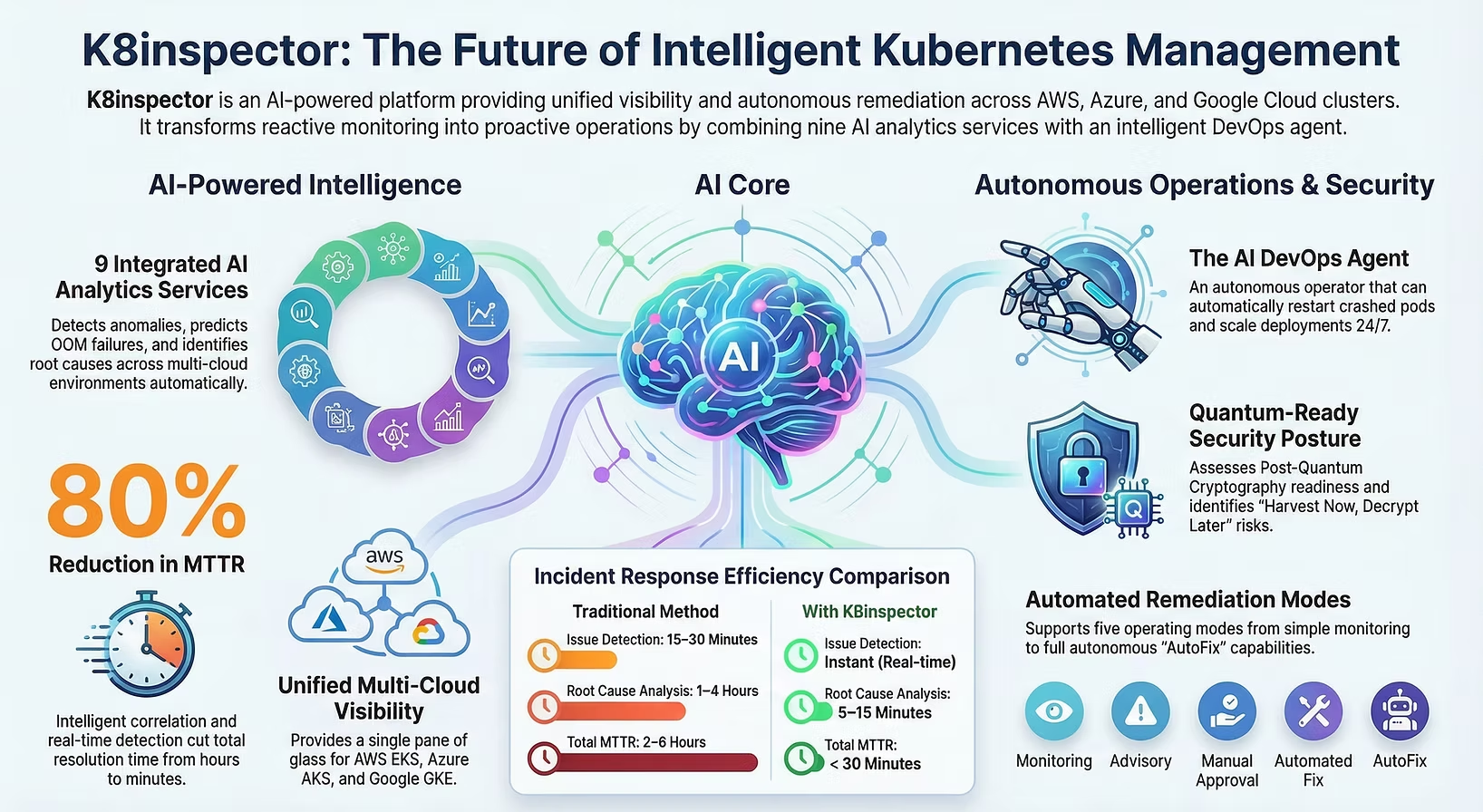
I genuinely cannot stress how much time this tool has saved us. That 45-minute 3 AM diagnosis? Now it takes under 5 minutes. The AI correlates logs, events, and metrics automatically and tells us exactly what's wrong.
This tool has been absolutely invaluable to our operations. It's transformed how we work.
"We built K8 Inspector because we needed it. We're sharing it because we believe every team deserves tools this good."
After seeing how much K8 Inspector transformed our operations, we realized other teams were facing the same challenges. Small teams. Tight budgets. The same gap in the market that had frustrated us.
So we decided to share it.
The Free tier gives you read-only access across your entire cluster - full observability, completely free. Because we believe every team should be able to see what's happening in their Kubernetes environment without worrying about licensing costs.
Professional and Enterprise tiers add write access, AI capabilities, security scanning, and everything else we've built over the past eight months of production use.
Existing tools were too expensive, too complex, or required too much maintenance for our small team.
We decided to build exactly what we needed - focused, fast, and designed for agility.
Deployed K8 Inspector to our production clusters. Immediate impact on resolution times.
Battle-tested in production. Added AI capabilities, security scanning, predictive analytics.
Sharing what we built with teams facing the same challenges we did.
Start with the Free tier. Full observability, completely free. No credit card required.